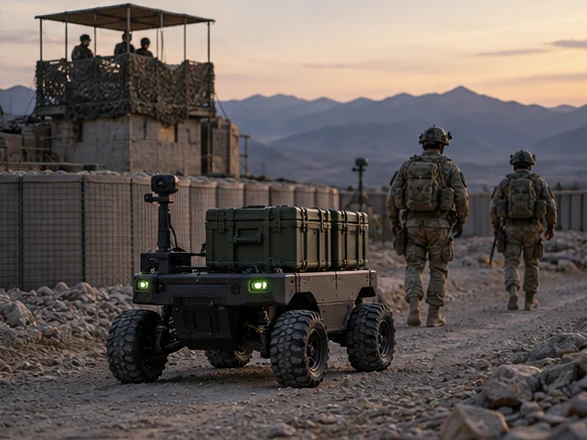
A damaged building, a remote supply route or a large site can be hard for people to reach and inspect. Remote robots can give teams another way to look, carry equipment or check conditions. This guide focuses on support and protection tasks.
Inspect before sending people
An unarmed remote platform can help view a difficult area. Operators need to understand the limits of the camera, connection and terrain. A missing signal should never be treated as proof that an area is safe.
Support supply movement
Robotic carriers can be considered for equipment and supply transport. Load limits, route conditions and recovery plans need to be tested before the system is relied on.
Help security teams review alerts
AI may help sort site events for human review. Poor lighting, animals and weather can create false alerts. Set clear privacy rules and check how often the system misses or misreads events.
Keep human control and accountability
Assign a responsible operator, define permitted tasks and log actions. Sensitive or safety-critical uses need specialist assessment. Human identification and use-of-force decisions should not be delegated to a marketing demo.
Further reading
Explore this independent reference for broader background.
NIST: AI Risk Management Framework