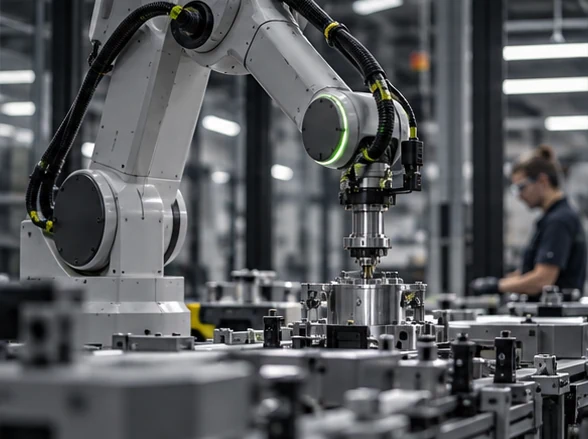
A good first question is not “Which robot should we buy?” It is “Which task is slowing us down?” Think about a job your team repeats every day, a delay customers keep noticing or a place that is difficult to inspect.
Understand the three tools
AI helps software recognise patterns or work with information. Robots perform physical tasks. Connected sensors report conditions such as temperature or vibration. A useful project may need one of these, rather than all three.
Write down the problem
Describe the task in plain words. Who does it now? How often? What goes wrong? A warehouse with late orders may need better stock records before it needs a robot.
Try a small pilot
Choose one location or workflow. Record current results, then test the change with the people who do the work. Include training, maintenance, support and downtime in the budget.
Judge the result fairly
Look at time saved, errors, staff workload and reliability. A convincing demonstration is not the same as a system that works every day.
Further reading
Explore this independent reference for broader background.
NIST: AI Risk Management Framework