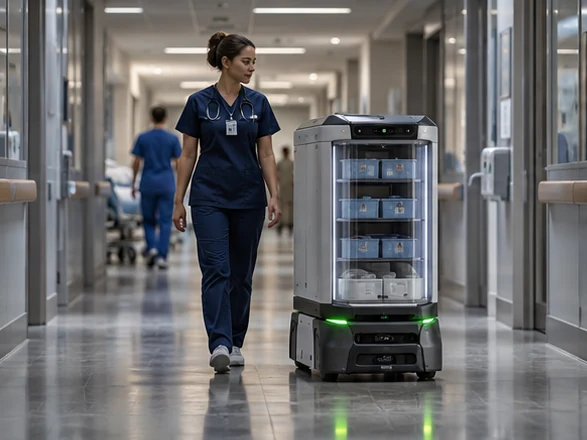
Picture a nurse walking between wards to collect supplies while patients are waiting. A delivery robot could take on some of those trips. The benefit is not the robot itself: it is more staff time available for care.
Move supplies, not decisions
Robots can support movement of suitable supplies along approved routes. Hospitals need to consider hygiene, secure storage, lifts, crowded corridors and what happens when a delivery fails.
Reduce routine administration
AI tools may help draft routine documents or organise information. Staff must check the output, and patient data should only enter approved systems. Confidential records do not belong in unapproved public tools.
Keep clinical decisions with qualified people
Tools used for diagnosis or treatment require appropriate clinical validation and regulatory review. An administrative pilot does not prove that a system is safe for clinical use.
Start away from the highest-risk tasks
A useful first project might track non-clinical supplies in one department. Involve nurses, facilities staff, infection-control teams and IT before selecting equipment.
Further reading
Explore this independent reference for broader background.
WHO: AI for health, ethics and governance